 ▶ Open the player
West Nkosi
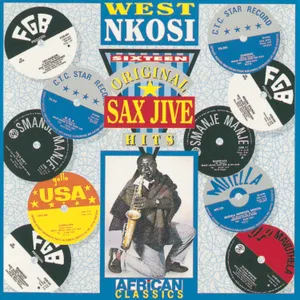
5 albums · 46 tracks on MAD Music · Township Jive
Mkhubatseli West Nkosi was born in 1940 in Nelspruit and came to music through the most self-determined of paths. When he was still in school in the late 1950s, he founded and played pennywhistle in a kwela band called the Pretoria Tower Boys. Unable to record in Pretoria, he made his way to Johannesburg, where he saved the rands he earned as a domestic worker, bought a saxophone, and began jamming with Marks Mankwane. It was the beginning of one of the most consequential musical partnerships in South African history.
A much-sought session player, Nkosi began to work closely with producer Rupert Bopape and under Bopape's guidance helped to pioneer the harder-edged offshoot of kwela that would become mbaqanga. While his playing was a major factor in the early 1960s success of Spokes Mashiyane and His All Star Flutes, Nkosi made his greatest impact as a producer. He became one of the most prolific and trusted figures at the Mavuthela Music subsidiary of Gallo Record Company, where he produced thousands of recordings by several famous South African artists, including the first 22 records for Ladysmith Black Mambazo, managing the group until their international discovery in 1987.
For a period of fifteen years during the 1960s and well into the 1970s, solo sax jives enjoyed enormous popularity throughout the entire southern African subcontinent, and Nkosi was one of the most successful and influential saxophone players of that era. His music was deliberately pan-ethnic in its ambition. As Nkosi himself explained, he took a little from each of the cultures living in South Africa — Shangaan, Zulu, Pedi, Tswana, Swazi, Xhosa — drawing on their traditional rhythms to create something that belonged to everyone. He wanted to introduce something new because technology was changing what people could hear and how they heard it, and he believed
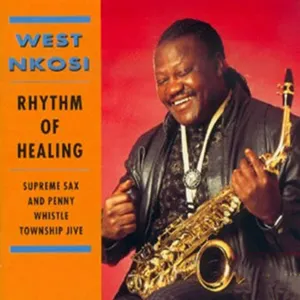
Nkosi produced all the international releases for Mahlathini and the Mahotella Queens and the Makgona Tsohle Band between 1986 and 1991, before leaving both to concentrate solely on producing. He returned to the recording studio with the critically acclaimed album Rhythm of Healing: Supreme Sax and Penny Whistle Township Jive in 1993, a record that gathered his instrumental mastery into one definitive statement. He also oversaw recordings by Amaswazi Emvelo, Mfaz' Omnyama, Phuzekhemisi, Joe Mafela and many others.
Nkosi was paralysed in an automobile accident in August 1998 and died from his injuries two months later on 8 October 1998, at the age of 58. In a statement delivered shortly after his death, Neil Greenberg of Gallo Record Company described his passing as the loss of one of South Africa's true musical visionaries. It was not an overstatement.