 ▶ Open the player
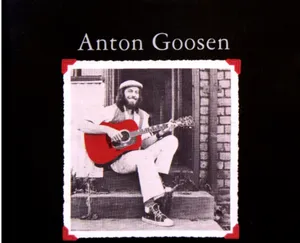
Anton Goosen
1 album · 10 tracks on MAD Music · Afro Folk
Few origin stories in South African music are as improbable as Anton Goosen's. Born on 5 March 1946 in Middelburg, in the Eastern Cape, Goosen was written off early, as a nine-year-old he was nearly placed in a class for children with mental disabilities because of his disruptive behaviour, and at seventeen a guidance counsellor advised him to give up on music altogether. He was expelled from boarding school in 1963 after being caught playing guitar and smoking in the bath; the school confiscated his guitar and filled its case with bricks. He formed his first rock band that same year regardless.
Goosen trained as a teacher, qualifying in special education, and taught for a time, including a stint at Johannesburg's St Stithians before working as a writer and reviewer for the newspaper Beeld. Music, though, kept pulling him back. He wrote songs for other artists first, most notably Sonja Herholdt, whose recording of his Jantjie became a major hit, along with material for Carike Keuzenkamp, Laurika Rauch, and even French pianist Richard Clayderman.
It was his own 1979 debut, Boy van die Suburbs, that changed everything: the first album of entirely self-written Afrikaans material, it sold over 80,000 copies and helped cement his reputation as the father of Afrikaans rock, and, as some critics have it, of the Afrikaans chanson. More than twenty albums followed, including Standbeeld, Groen en Goudand Liedjieboer, alongside enduring hits like Silwer Duif, Kruidjie-roer-my-nie and Waterblommetjies.
His contribution has been formally recognised more than once: a 2009 centenary medal from the Suid-Afrikaanse Akademie vir Wetenskap en Kuns, a 2010 ATKV songwriting award, and a gold Voortrekker Medal of Honour in 2011. A biography, Anton Goosen: Liedjieboer, followed in 2020. Now in his seventies, Goosen continues to tour and record, proof that the boy nobody believed in became, by most measures, one of the most-covered songwriters in Afrikaans music history.